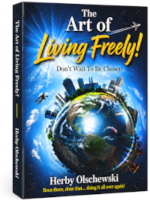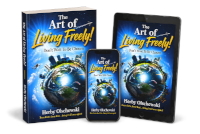
It’s free. It’s for you. Read it. Use it. Pass it on.
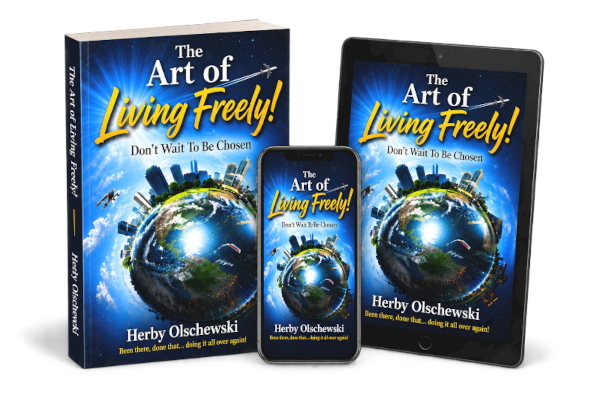
A practical book about building more choices in a changing world.

What happens when the career path you were taught to follow no longer leads where you expected? When experience seems to count for less than it once did? When technology changes faster than you can comfortably keep up? Or when you are employed, working hard and doing everything you are supposed to do, yet still struggling to get ahead?
The Art of Living Freely! begins with a simple proposition:
The map has changed. You haven’t been returned to zero.
Your previous work, life experience, relationships, knowledge and hard-earned judgement have not disappeared because circumstances have changed. They are assets you can carry into your next chapter.
This book explores how to recognise those assets, combine them with new tools and opportunities, and take practical steps towards greater independence.
It is not about abandoning employment, becoming an entrepreneur overnight or escaping every responsibility. Employment remains a perfectly valid road. It is simply no longer the only road worth understanding.
The aim is to help you discover more than one way forward.
What does living freely actually mean?
Freedom means different things to different people.
For one person, it means finding meaningful employment. For another, it means creating an additional source of income so that every unexpected expense is not a crisis.
It might mean working remotely, spending more time with family, changing careers, becoming self-employed, retiring with confidence or having enough financial breathing room to say no to something that no longer serves you.
It might also mean having the time and resources to help somebody else.
The book does not prescribe one ideal lifestyle. Instead, it encourages you to define what freedom means in your own circumstances and then identify practical ways to move towards it.
Financial independence matters, but money is not the only measure of a life worth living. Time, relationships, health, purpose and the freedom to make meaningful choices matter too.
Freedom is having choices.
“Shoot for the moon. If you miss, you will be among the stars anyway!”

Who is this book for?
This book is for anyone who senses that the next chapter of life may require a different approach from the one that brought them this far.
It is particularly relevant to:
- Jobseekers and people facing redundancy who want to strengthen their prospects while exploring opportunities beyond traditional applications.
- People who are employed but financially stretched and would like to investigate additional income without immediately abandoning their jobs.
- Experienced professionals considering reinvention who need to translate years of accumulated capability into opportunities in a changing market.
- Students and young people who want to develop useful skills, build evidence of what they can do and create opportunities before somebody gives them a first formal chance.
- Freelancers, independent professionals and aspiring entrepreneurs who want to test ideas, create genuine value and develop more dependable sources of income.
- People approaching retirement or starting again later in life who still have knowledge, experience and curiosity to put to good use.
- Anyone concerned about AI and technological change who would rather learn to work with new tools than be left wondering what happens next.
- People who want their success to benefit others, not simply improve their own circumstances.
You do not have to fit neatly into any category.
You may be financially secure but looking for purpose. You may have plenty of ideas but little direction. You may need income urgently, or simply want to build more options before circumstances force you to change.
You do not need an expensive course, an impressive qualification or a large amount of starting capital to begin exploring.
You need a willingness to examine what you already have, learn what you need next and take one useful action.
.
No matter where in the world, nor what you do for a living, this book is for EVERYONE.

What makes this book different?
There is no shortage of material promising success, freedom and financial independence. Much of it tells you what you ought to achieve without explaining how to begin from your actual circumstances.
This book takes a different approach.
It starts with the person you are today—not an imaginary version of you with unlimited money, time, confidence or connections.
It encourages you to distinguish between genuine constraints, problems that can be solved and assumptions that have never been tested.
It treats AI as a capable assistant, not an oracle or a magical income machine. You remain responsible for your decisions, and important information still needs verification.
It connects earning with creating real value. A business is not successful merely because it has a website. An affiliate recommendation is not worthwhile simply because it pays commission. A new idea becomes more credible when actual people find it useful.
Above all, it turns thinking into experimentation.
Think big. Test small.
A modest, well-designed experiment can teach you more than months of planning something you never put in front of another human being.
An experiment may fail. That does not make you a failure.
.
What is inside the book?
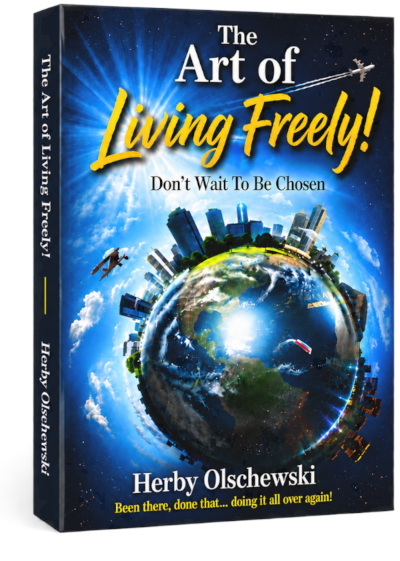
The book contains 13 chapters, an introduction, an afterword and eight practical appendices.
It moves from understanding your current position to exploring new opportunities, making yourself useful, connecting with people and putting a workable plan into action.
Complete table of contents
Introduction — Don’t Wait to Be Chosen
- There Is No Square One
- The Map Has Changed
- Yes, But…
- Pick a Road
- Put AI on Your Team
- I Am Because We Are
- The Freedom Loop
- Make Yourself Valuable — And Get Paid for It
- The 30-Day Freedom Challenge
- Choose Your Road
- What Does Freedom Look Like to You?
- Doing It All Over Again
- Choose Yourself
Afterword — Take Action!
Appendices
- A. The Freedom Toolkit
- B. The AI Prompt Library
- C. The Five-Person Freedom Circle
- D. The 30-Day Freedom Challenge
- E. The Open-to-Work Action Plan
- F. The 90-Day Freedom Plan
- G. The Conversation & Outreach Toolkit
- H. The Freedom Manifesto
The book also includes Resources & Next Steps, A Note on Sharing and acknowledgements.
More than a book: a practical toolkit
Reading can change the way you think. But applying what you learn is what creates new evidence, capability and opportunity.
That is why the appendices are an important part of The Art of Living Freely!
They are designed to be revisited, completed, printed, discussed and used in real life.
You do not need to complete everything in order. Begin with the tool that addresses the problem in front of you.
Appendix A — The Freedom Toolkit
Turn reflection into a personal starting point.
A collection of practical worksheets for taking stock of your capabilities, exploring possible directions, understanding constraints and defining what greater freedom means to you.
It includes the Invisible Backpack, the New Map, the One-Road Rule, the €100 Experiment, Freedom Numbers, the Ideal Ordinary Tuesday and the One-Page Freedom Plan.
Use it when: you feel stuck, cannot identify what you have to offer, have too many ideas or need to turn a vague ambition into a specific next step.
Appendix B — The AI Prompt Library
Put AI to work on real problems.
Thirty practical prompts to help you examine transferable skills, explore possible careers, investigate opportunities, develop ideas, improve professional visibility and challenge your assumptions.
The prompts are designed to provide useful context rather than rely on clever wording. They also encourage you to identify uncertainty, verify important information and finish with a real-world action.
Use it when: you want a thinking partner, research assistant, career translator, tutor or constructive critic.
AI can help you prepare and think. It cannot make your decisions or do the living for you.
Appendix C — The Five-Person Freedom Circle
Build momentum with people, not in isolation.
A practical guide to forming a small mutual-support group.
Five people meet for approximately thirty minutes each week to discuss what they have done, what they have learned, what they intend to do next and what help they need.
The emphasis is on useful introductions, accountability, different perspectives and genuine support—not recruiting or selling to one another.
Use it when: you need encouragement, outside perspectives, accountability or people with whom to exchange practical help.
You can start your own Freedom Circle without joining an organisation.
Appendix D — The 30-Day Freedom Challenge
Give yourself thirty days of observable progress.
A printable, day-by-day challenge organised around four stages: direction, capability, real-world engagement and outcomes.
Each day asks you to take a manageable action. By the end of the month, you review what you created, who you spoke to, what you learned and whether the chosen direction deserves more attention.
Use it when: you have been planning for too long, need structure or want to test a new direction without making a permanent commitment.
Miss a day? Continue. The objective is movement, not perfection.
Appendix E — The Open-to-Work Action Plan
Make your experience relevant to the opportunity ahead.
A practical employment-search toolkit covering professional positioning, transferable skills, CV clarity, networking, applications, interviews, follow-up and evidence of current capability.
It includes approaches such as the 20-20-20 campaign and a structured thirty-day job-search plan.
The emphasis is on treating a job search as a process that can be examined and improved, rather than allowing each unanswered application to become a verdict on your worth.
Use it when: you are unemployed, facing redundancy, returning to work or trying to move into a different industry.
Being Open to Work describes a circumstance. It does not define your entire identity.
Appendix F — The 90-Day Freedom Plan
Develop a promising idea into something more substantial.
The ninety-day plan uses three practical stages:
PROVE → IMPROVE → REPEAT
The first thirty days establish whether your chosen direction deserves attention. The next thirty improve what is working. The final thirty test whether useful results can be repeated.
It includes measurable goals, weekly reviews, decision points and a commitment to protecting the health, time, relationships and energy that make freedom worthwhile.
Use it when: your first experiment has produced encouraging evidence and you want to develop a more consistent process.
Appendix G — The Conversation & Outreach Toolkit
Open doors through clear, respectful communication.
Ready-to-adapt examples for reconnecting with former colleagues, approaching people for career advice, requesting introductions, contacting recruiters, presenting an offer, following up, asking for referrals and giving or receiving help.
The objective is not to turn every relationship into a transaction. It is to make useful conversations easier to start.
Use it when: you know you should contact somebody but are unsure what to say.
Human first. Opportunity second.
Appendix H — The Freedom Manifesto
A set of principles to return to when the road becomes difficult.
A reminder that you are not starting from zero, that plans can change, that AI is a tool, and that real progress is built through purposeful action.
It brings the book’s core ideas together: personal responsibility, useful capability, genuine relationships, reasonable experimentation and defining enough for yourself.
Use it when: you need perspective, encouragement or a reminder of why you started.
The philosophy behind the book: Ubuntu
I am because we are.
At the heart of The Art of Living Freely! is the African philosophy of Ubuntu, expressed in these simple words:
I am because we are.
No person builds a meaningful life entirely alone.
Our capabilities develop through relationships with families, teachers, colleagues, customers, communities and people who share their knowledge or give us an opportunity.
We benefit from what others have built. Others may benefit from what we build next.
Ubuntu recognises that our individual lives and the lives of those around us are connected.
That does not mean sacrificing your ambitions, abandoning your independence or making yourself responsible for everybody else’s problems.
It means recognising that independence and interdependence are not opposites.
You can pursue greater financial security while helping somebody else become more capable. You can create a business while contributing to your community. You can receive help today and offer it tomorrow.
The more choices people around us have, the stronger our communities can become.
Earning. Caring. Sharing.
The book connects Ubuntu with a practical mission: helping people from all walks of life gain greater financial independence while caring for the world around them.
The philosophy can be expressed in three words:
Earning. Caring. Sharing.
Earning means using your capabilities to create genuine value and develop the resources needed to support yourself and those who depend on you.
Caring means recognising that our choices affect other people, communities, animals and the natural world.
Sharing means passing on useful knowledge, making introductions, opening doors and helping other people develop their own ability to move forward.
You do not have to wait until you are wealthy or successful before helping somebody.
Teach one useful skill. Make one introduction. Share one opportunity. Help somebody understand a tool you already know how to use.
And remember that receiving help is also part of Ubuntu.
Charity begins at the cash register.
This is a practical way of thinking about sustainable support for worthwhile causes.
Instead of depending entirely on requests for donations, can ordinary economic activity also create resources that support the things we care about?
Can businesses offer genuine value to customers while helping an initiative? Can ethical referral arrangements generate recurring revenue? Can people create income while making something useful happen for others?
The principle is not that every generous act needs a financial return. It is that earning and caring can reinforce one another.
It is also why trust must come before commission.
A recommendation should be made because it genuinely helps the person receiving it—not merely because somebody stands to earn from the transaction.
Community before commission. Value first.
Our approach: no pressure, no exaggerated promises
The wider Ubuntu Synergy philosophy is built around five clear principles.
NO SPAM — Respect people’s attention. Communicate because something is relevant and useful, not through relentless pressure.
NO HYPE — No promises of overnight success, effortless wealth or guaranteed results. Progress requires useful action, learning and judgement.
NO MLM — No recruitment downlines or multi-generational commission structures. The wider initiative model uses direct, single-tier referrals rather than multi-level recruitment.
NO ADS — The emphasis is on useful content, genuine participation and direct value rather than advertising clutter.
NO DONATIONS — The objective is to develop sustainable ways to support worthwhile causes through value creation and economic activity, rather than depend on requests for donations.
These principles reflect the larger purpose of the book.
People should feel free to explore, question, participate and make their own decisions.
 |
 |
 |
 |
 |
Why is the complete digital book free?
Because the intention is to get the ideas into the hands of people who may find them useful.
A price barrier makes little sense when one of the book’s central themes is helping people create more options, particularly when money may already be tight.
The authorised PDF edition is deliberately free and shareable.
There is no registration requirement, email gate or credit-card requirement to obtain the free book. The ePub edition is also available for readers who prefer that format.
A printed paperback is available for $9.99 for those who prefer a physical copy.
The book does not require you to purchase a course, join an affiliate programme, subscribe to a membership platform or participate in any of the wider initiatives to use its ideas and exercises.
The community and related initiatives provide optional ways to explore further. They are not prerequisites for getting value from the book.
Free does not mean worthless. It means the distribution strategy is different.
You are encouraged to share the complete, unaltered PDF for personal, educational and non-commercial community purposes. The exercises may also be used in those settings with attribution. Commercial resale or adaptation requires permission.
What this book does not promise
It does not promise that everybody can become wealthy, that AI will replace the need for work or that one month of effort will solve every financial problem.
It does not claim that every obstacle can be overcome through positive thinking.
Some situations involve real constraints. Some directions require substantial training, capital, qualifications or time. Some experiments will not produce the outcome you hoped for.
The purpose is to help you examine your circumstances more clearly, understand your options, test what is possible and make better-informed decisions.
The book provides educational information and practical exercises, not personalised financial, legal, tax or other regulated professional advice.
You decide which ideas are relevant. You choose your direction. You retain responsibility for your actions.
You do not have to change your whole life today.
You can start with one page, one question or one small experiment.
Perhaps you need to rediscover what you have to offer.
Perhaps you need a more effective job search.
Perhaps you want to find out whether somebody will pay for a useful service you can already provide.
Perhaps you simply want to understand what AI could do for you.
Choose the part of the book that addresses your immediate circumstances.
Take one useful action.
Then take another.
Nobody starts from zero. Nobody needs to wait for permission to begin exploring.
Ready to take a closer look?
 |
 |
 |
.
Read it. Use it. Pass it on.
.
Don’t Wait To Be Chosen. Choose yourself.
.

.